
Can You Read Body Language?
Crossed arms, wandering eyes, mirrored posture — what do they really mean? Seven scenarios test your people-reading skills. Spoiler: context beats clichés.
What you’ll learn
Can you really read body language?
Partly. Nonverbal cues — posture, eye contact, facial expressions — carry real information about comfort and engagement, and humans read them intuitively. But single 'tells' are unreliable; accuracy comes from clusters of cues plus context. Claims of foolproof lie detection are pseudoscience.
What does crossed arms mean?
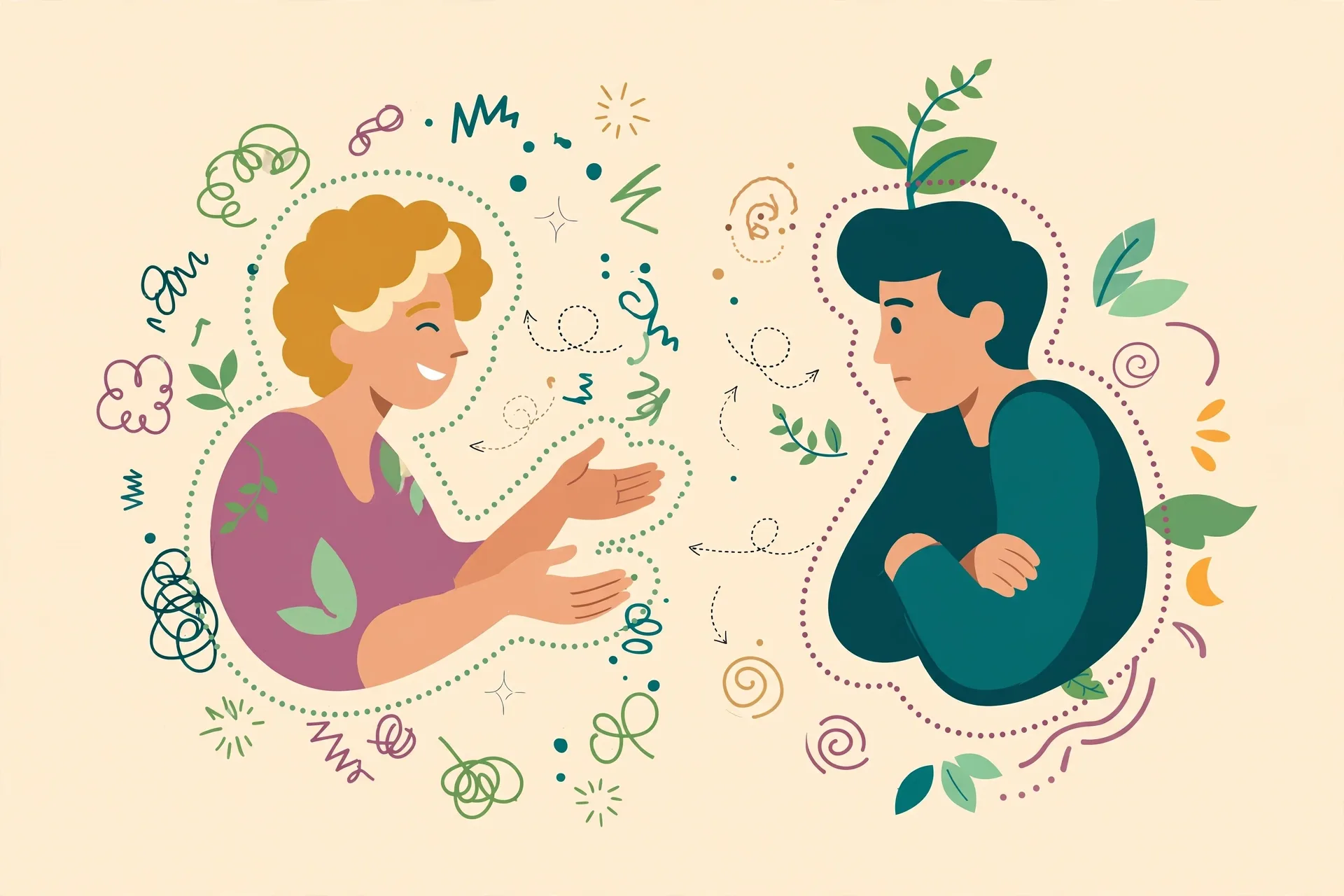
Not always defensiveness, despite the cliché. Crossed arms can mean someone is cold, comfortable, or simply resting. Interpret alongside other signals: crossed arms plus leaning away and short answers suggests disengagement; crossed arms plus relaxed smiling suggests ease.
Does mirroring body language build rapport?
Yes, modestly. Subtly matching someone's posture and gestures tends to increase feelings of connection — good conversationalists do it unconsciously. But forced or obvious mirroring backfires. Face people, uncross your limbs, and let synchrony happen naturally.
Keep exploring: how to find a therapist in Austin · therapy options · mental health resources
Reading people is a skill.
So is being read — therapy is great practice for both. Browse real therapists near you.
Find care near you