
Caring for Someone Else? Check Your Own Tank
You know their medications, their appointments, their moods. Who's tracking yours? Ten questions for the person everyone assumes is fine.
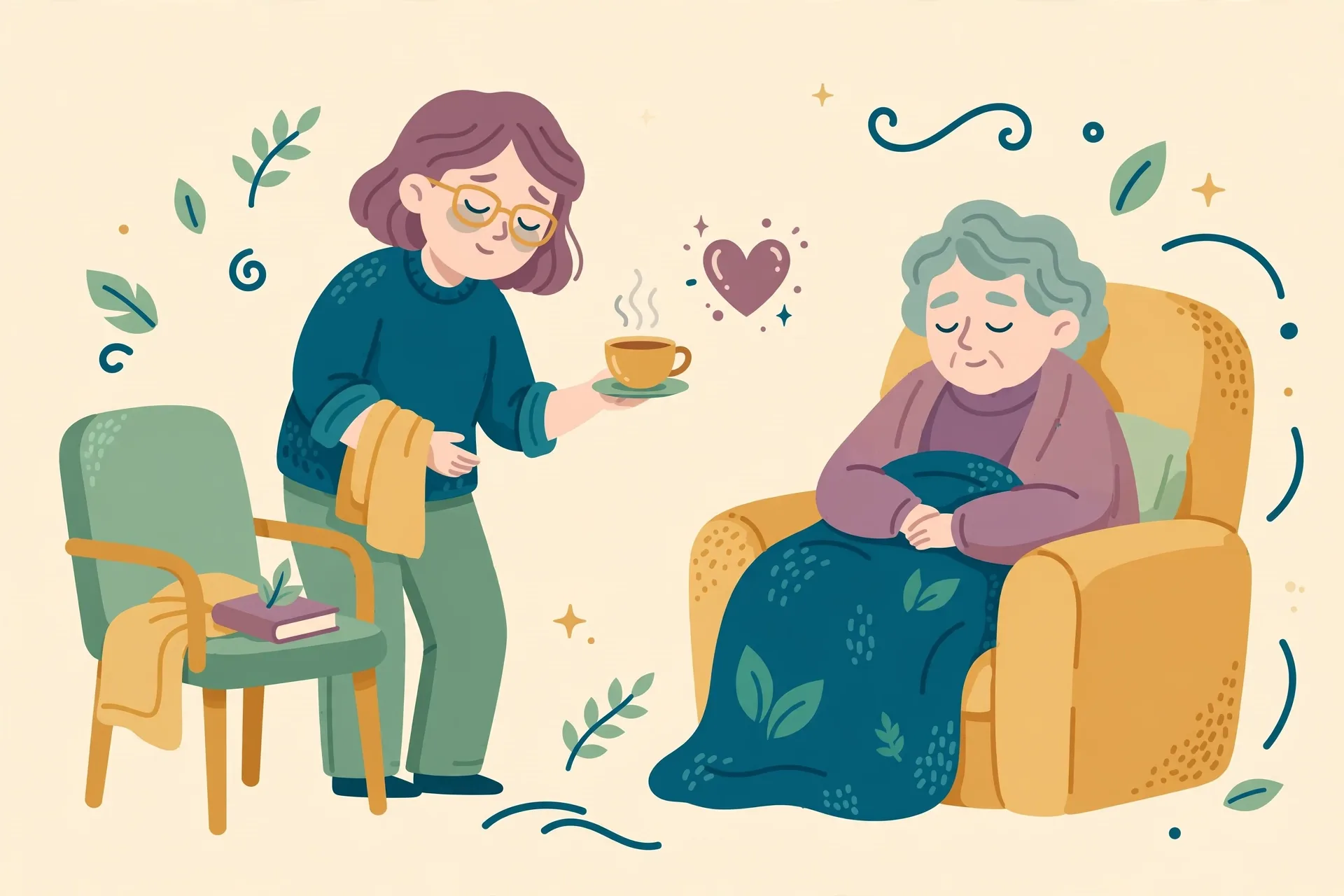
What this quiz measures — and what it doesn’t
This quiz reflects on the everyday strain of caregiving: vigilance, sleep, resentment-and-guilt cycles, and the disappearance of your own life around the role. It measures a load level, not your devotion, and it cannot diagnose depression or clinical burnout. Caregivers have measurably elevated rates of both, though — so if your answers worry you, the validated WHO-5 well-being check below is a more serious instrument, and a conversation with your own doctor matters too.
Common questions
What is caregiver fatigue?
It's the cumulative physical and emotional depletion of long-term caregiving: constant vigilance, broken sleep, physical strain, and the slow cancellation of your own life. Researchers also use 'caregiver burden' and, at the severe end, compassion fatigue. Whatever the label, the pattern is consistent — and it's a health risk in its own right, not just a side effect of someone else's illness.
Is it normal to resent the person I'm caring for?
Yes — and it's one of the least-spoken, most universal parts of caregiving. Resentment usually targets the situation, the disease, and the lost life, not the person. It typically arrives holding hands with guilt, which is why caregivers suffer in silence. Naming it — to a therapist, a support group, a trusted friend — reliably lowers its power.
What is anticipatory grief?
Grieving someone who is still alive: grieving the parent who no longer knows your name, the partner whose personality the illness changed, the future you planned together. It's real grief, with the same weight, but it often gets no recognition, no rituals, and no casseroles. Therapists familiar with caregiving treat it as central, not incidental.
When should a caregiver get professional help?
When sleep, mood, or health starts failing; when resentment tips into dread or numbness; when you're snapping at the person you love; or when your own medical care has been postponed for months. You don't need to reach collapse to qualify. Many therapists work specifically with caregivers, and caregiver support groups — often free through hospitals and disease organizations — are genuinely effective.
Keep exploring: the WHO-5 Well-Being Index self-check · our guide to stress & burnout · all pop quizzes
The caregiver is a patient too
Therapists who work with caregivers specialize in exactly this: the guilt, the grief-inside-the-living, the identity that shrank to a role. You don't have to wait until you break to deserve a room of your own.
Find care near youOr take the validated WHO-5 Well-Being Index self-check.