
Can You Read Your Body's Stress Signals?
Stress rarely announces itself as 'stress'. It shows up as a jaw, a stomach, a 3 a.m. wake-up. Ten body signals — and what each one is really reporting.
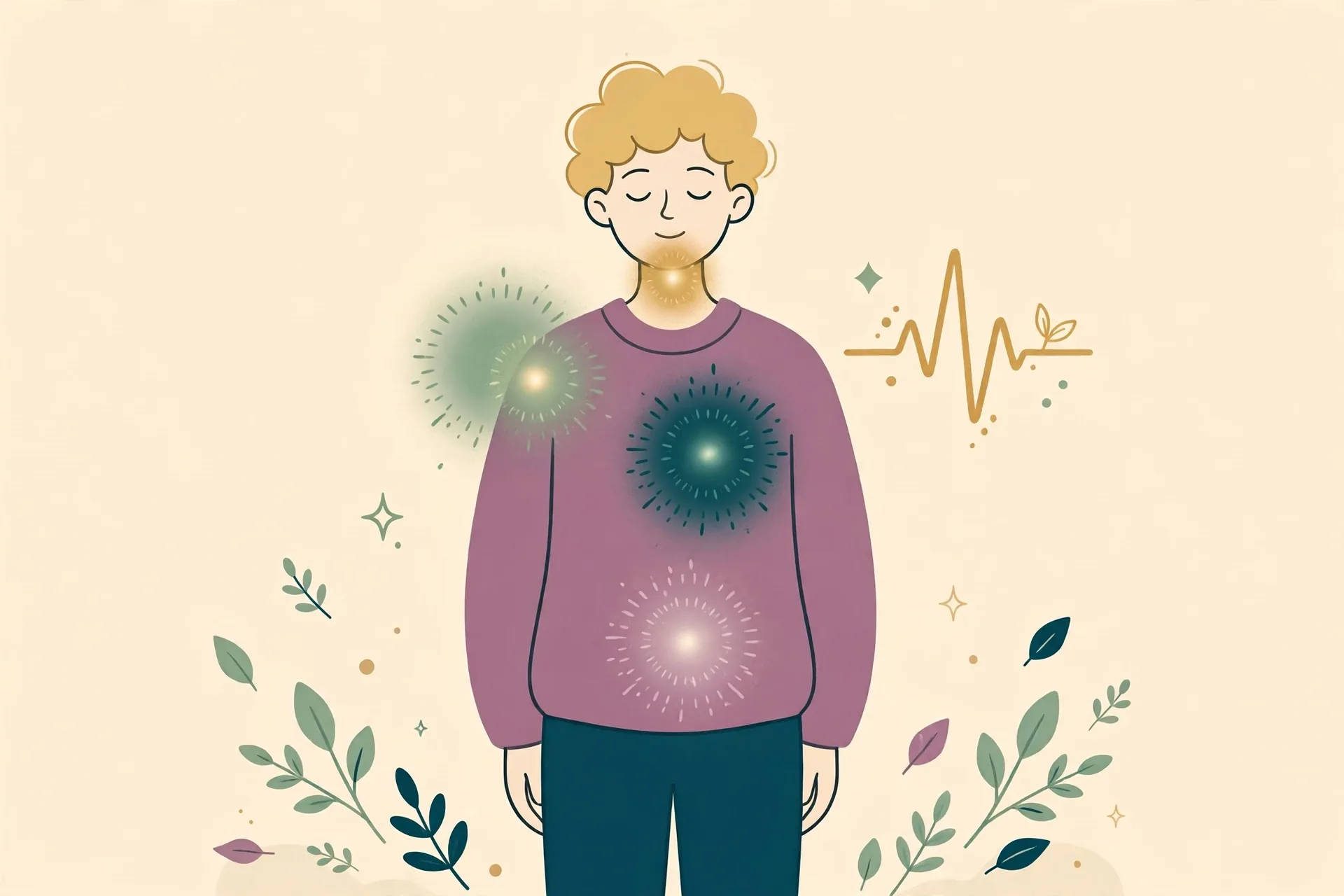
What this quiz measures — and what it doesn’t
This quiz measures how accurately you read common stress signals — jaw tension, stress headaches, gut changes, sleep disruption — and whether you know which symptoms need a doctor rather than a deep breath. It measures knowledge, not your health: it can't diagnose stress, anxiety, or any physical condition. If physical symptoms are piling up in your real life, the validated PHQ-15 somatic screening below is a far better instrument, and new or severe symptoms always warrant medical evaluation.
Common questions
How does stress actually show up in the body?
Through the stress-response system: adrenaline and cortisol raise heart rate, tense muscles, redirect blood from digestion, and lighten sleep — perfect for short emergencies, corrosive when switched on for months. Common reports include jaw and shoulder tension, headaches, stomach and bowel changes, frequent minor illness, and a wired-but-tired feeling. It's the same system in everyone; the favorite outlet varies by person.
Can stress really cause physical symptoms, or is that dismissive?
It really can — 'psychosomatic' means symptoms produced through mind-body pathways, and the symptoms themselves are 100% real. A tension headache hurts exactly like any headache. The mechanism isn't weakness or imagination; it's physiology. That said, stress should never be the first assumption: clinicians rule out physical causes first, because some serious conditions masquerade as 'just stress.'
Which stress symptoms should send me to a doctor promptly?
Chest pain or pressure, fainting, unexplained weight loss, blood in stool or vomit, a headache that's sudden and the worst of your life, new weakness or numbness, fever that persists, or any symptom that is new, severe, or rapidly worsening. Also: any physical symptom that doesn't ease as stress eases. When in doubt, get checked — that's what the system is for.
What actually turns the stress response off?
The physiology responds to signals of safety and completion: slow breathing with long exhales, physical movement (which metabolizes stress hormones), sleep, daylight, and social connection. What doesn't work well is arguing with the symptoms. Chronic cases benefit from therapy approaches that work body-first — and from treating any anxiety disorder that's keeping the alarm switched on.
Keep exploring: the PHQ-15 somatic symptom screening self-check · our guide to anxiety · all pop quizzes
When your body keeps filing reports
Persistent physical symptoms deserve two kinds of attention: medical (rule out the body causes) and psychological (stress writes on the body). Therapists and doctors who work together are the dream team here.
Find care near youOr take the validated PHQ-15 somatic symptom screening self-check.