
How Good Is Your Memory, Really?
Your memory is not a video recorder — it's a creative storyteller. Seven myth-or-fact questions on false memories, studying, and why you forget.
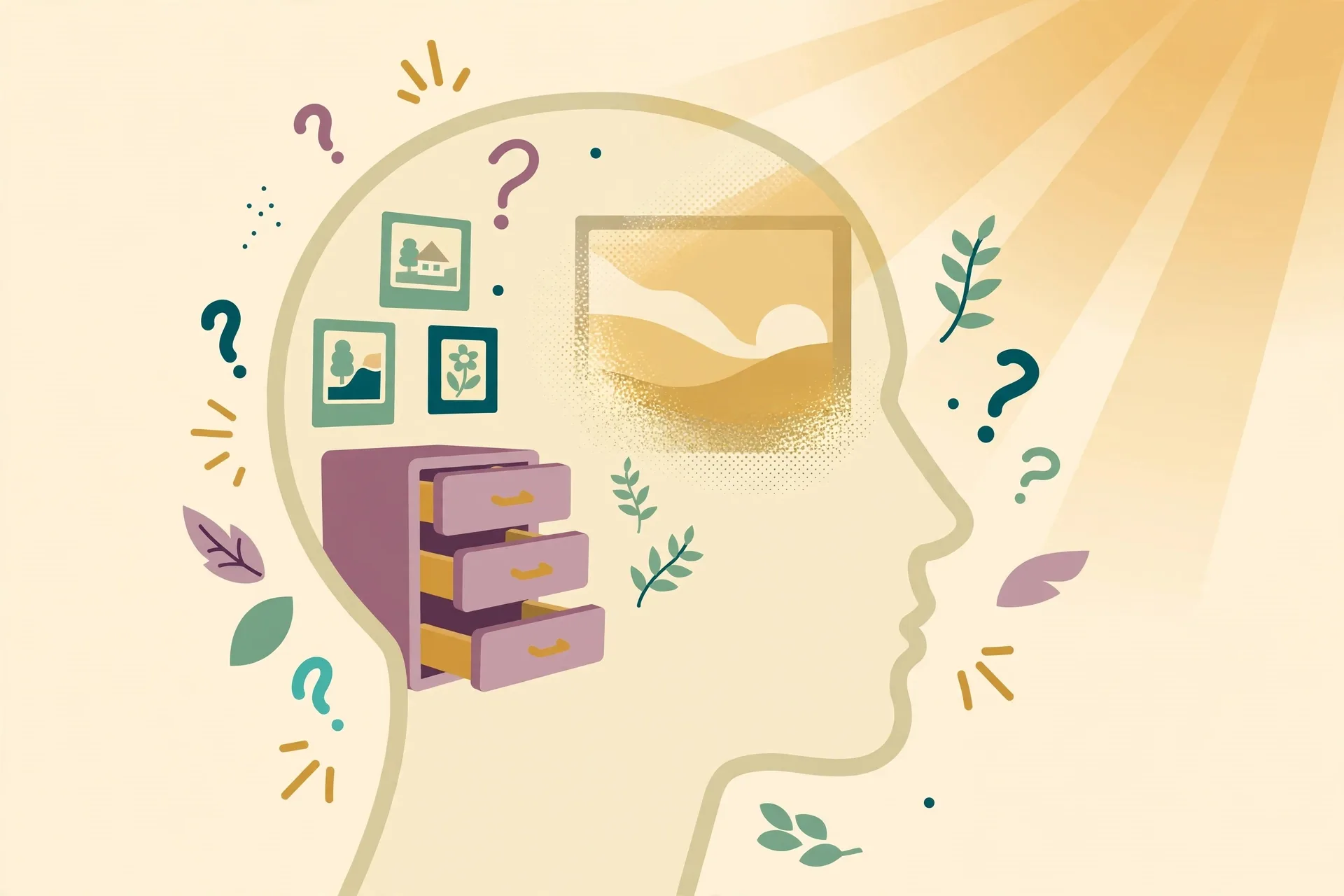
What you’ll learn
Is memory like a video recording?
No — that's the biggest memory myth. Human memory is reconstructive: every recall rebuilds the event from fragments, colored by current mood and later information. That's why two witnesses remember the same event differently, and why memories feel certain even when they're wrong.
Can you remember things that never happened?
Yes. Psychologists have reliably implanted entirely false memories — getting lost in a mall, even committing a crime — through suggestion and imagination exercises. False memories feel as vivid and certain as real ones, which is why confident eyewitness testimony has contributed to wrongful convictions.
What's the best way to study for long-term memory?
Spaced retrieval: testing yourself across multiple sessions beats re-reading or cramming. Each successful recall strengthens the memory trace, and spacing forces your brain to reconstruct it — the effort is the point. Flashcards and practice questions exploit this effect.
Keep exploring: mental health resources · free mental health self-checks · therapist vs. psychiatrist: which do you need?
Fascinated by how minds work?
There's a whole library of explainers waiting. Or talk to a professional about yours.
Find care near you